Commercial Cooking Fire Safety Guide
Practical guidance for facilities that prepare, reheat, or serve food

Why commercial cooking fire safety matters
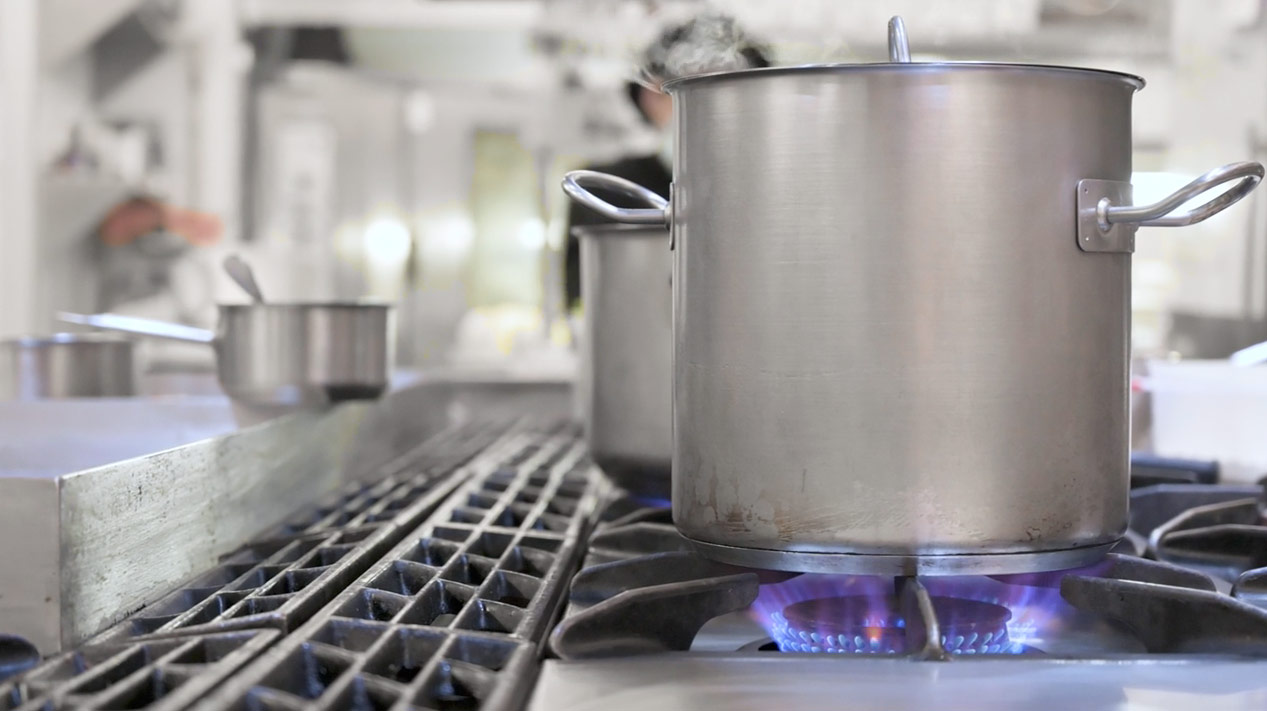
Commercial kitchens present one of the highest fire risks in many buildings. Grease, high temperatures, cooking oils and open flames can quickly turn a small cooking incident into a serious building fire.
This guide explains the practical steps needed to reduce those risks and is intended for facility managers, kitchen supervisors, staff and volunteers responsible for commercial or warming kitchens.
Common Fire Hazards
Commercial kitchen fires usually start or spread because of grease build-up, high-temperature equipment, missed maintenance, or changes in how the kitchen is used.
The main hazards to control are:

Grease-laden vapours
Cooking oils and fats can collect inside hoods, filters, ducts, and exhaust fans. These deposits are highly combustible and can ignite easily.

High-temperature equipment
Fryers, charbroilers, ovens, ranges, and griddles operate at temperatures that can ignite oil, grease, food residue, packaging, towels, or other nearby combustibles.

Human factors
Fire risk increases when equipment is misused, filters are installed incorrectly, cleaning is missed, staff are not trained, or unapproved appliances are added.

Fire spread through ventilation
A fire that starts at the cooking surface can move into the hood and duct system, then spread to concealed ceiling spaces, roof areas, or other parts of the building if the system is not properly built and maintained.
Codes and standards to follow
Commercial cooking systems must meet the requirements adopted by the local authority having jurisdiction, such as the fire department, building department, or other code official. You do not need to memorize these standards, but your service providers should be working to them.
Your installer and service contractor should ensure your kitchen complies with the applicable National Fire Code of Canada, provincial fire code and the relevant NFPA standards including NFPA 96, NFPA 17A and NFPA 10.
Always confirm local requirements with the authority having jurisdiction, as adopted codes and enforcement expectations can vary by province, territory, and municipality.
Hoods, filters, ducts, and ventilation
A commercial kitchen exhaust system captures and removes grease-laden vapours before they can spread through the building or collect on surfaces. The system usually includes a Type I hood, grease filters, ductwork, an exhaust fan, and related controls. It must be designed, installed, cleaned, and maintained in accordance with NFPA 96, the National Fire Code of Canada, and the applicable provincial fire and building codes in your Province or territory.
The exhaust and fire suppression systems must work together.
Cooking equipment that produces grease-laden vapours normally requires a Type I exhaust hood. Baffle-style grease filters must be installed correctly, kept in place during cooking, and cleaned often enough to prevent grease build-up. Mesh filters are not suitable for grease exhaust systems. Hood surfaces should also be wiped down regularly between professional cleanings.
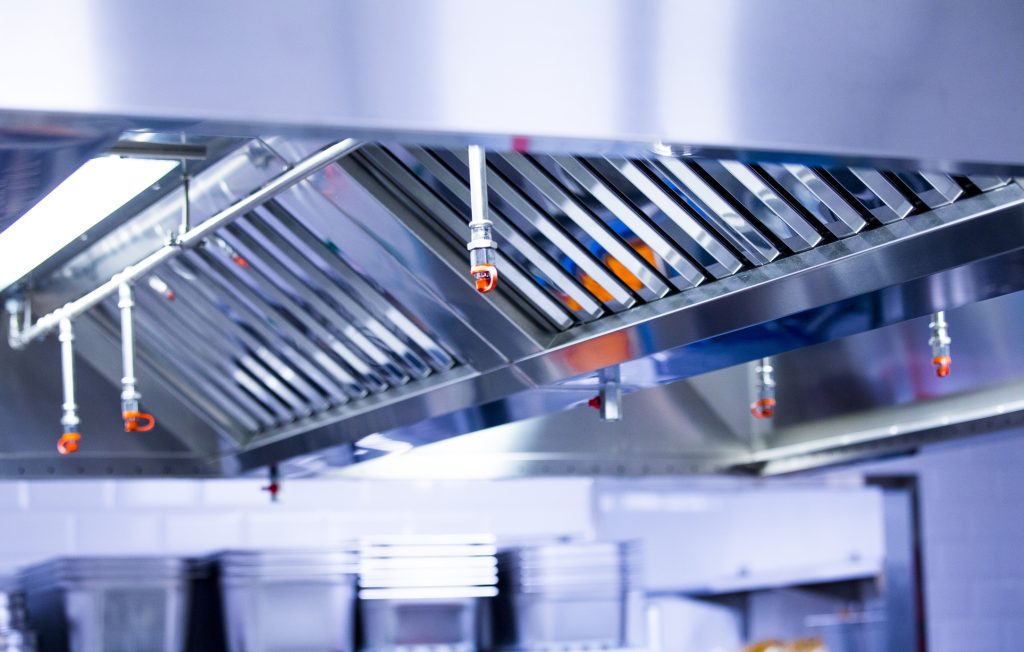
Ductwork must be grease-tight, properly routed to the outdoors, and provided with access panels so the full system can be inspected and cleaned. Ducts that pass through fire-rated or concealed spaces must be protected as required by the applicable code and approved system design.
Exhaust discharge must be arranged so that heat and grease-laden air does not re-enter the building or collect on roofs, walls, air intakes, nearby openings, or adjacent structures.
The exhaust and fire suppression systems must work together. When the suppression system activates, fuel and electrical power to protected cooking appliances must shut off automatically, the exhaust fan should continue to operate as required by the approved design, and the fire alarm system should transmit a signal where required.
Fire suppression systems

Commercial cooking equipment that produces grease-laden vapours must be protected by an approved ULC/UL 300 listed wet chemical fire suppression system installed, inspected, tested and maintained in accordance with NFPA 17A, NFPA 96, the National Fire Code of Canada and applicable provincial requirements.

A typical system includes nozzles aimed at protected appliances, nozzles for the hood and duct, heat detection, agent cylinders, activation hardware, and a manual pull station. The manual pull station must be easy to reach and located along the path of exit from the cooking area.

When the system activates, fuel and electrical power to the protected appliances must shut off automatically. Exhaust fans should continue to operate as required by the approved design, and make-up air or supply fans should shut down where required to support fire control.

Where the building has a fire alarm system, the kitchen suppression system should be connected to it when required by the applicable code or authority having jurisdiction.

The system must be inspected and maintained at least every 6 months by a properly trained and qualified technician, and records should be kept on file.

Do not operate protected cooking equipment if the hood, exhaust fan, or fire suppression system is out of service unless the authority having jurisdiction and your insurer have approved interim controls.
Portable fire extinguishers
A Class K portable fire extinguisher is required where cooking appliances use combustible cooking media, such as vegetable oils or animal fats. Class K extinguishers are designed for high-temperature cooking oil fires and help reduce the chance of re-ignition.
Class K extinguishers must be located within 30 feet (9.1 metres) of the cooking equipment and must be visible, accessible, and unobstructed. If the cooking surface is protected by an automatic hood suppression system, a placard should remind staff, volunteers, and kitchen users to activate the fixed suppression system before using the portable extinguisher.
The PASS method: pull the pin, aim at the base of the fire, squeeze the handle, and sweep side to side.
Staff should complete monthly visual checks to confirm that extinguishers are in place, accessible, mounted correctly, fully charged, sealed, and free from visible damage or corrosion. A certified technician must service extinguishers annually.
Staff, volunteers, and kitchen users should be trained to recognize when it is safe to use an extinguisher and when to evacuate. Only attempt to extinguish a fire if you have first activated the fixed suppression system (where installed), have a safe escape route, and the fire is still small. You should also understand the PASS method: pull the pin, aim at the base of the fire, squeeze the handle, and sweep side to side.
Important: Do not use ordinary Class B extinguishers as the primary protection for commercial cooking oil fires. Use the required Class K extinguisher and follow the fixed suppression system instructions.
Cleaning Frequency
| Operation type | Typical minimum cleaning frequency |
|---|---|
| High-volume, 24-hour, charbroiling, wok, or heavy grease operations | At least every 3 months |
| Moderate-volume operations | At least every 6 months |
| Low-volume or seasonal operations | At least annually |
* These frequencies represent minimum recommendations. Heavy grease deposits may require more frequent cleaning.
These are minimum intervals. If your regular inspection shows a buildup of heavy grease deposits, then the contaminated parts of the system must be cleaned by a properly trained and qualified service provider more frequently as needed.
Deep fryers must be safely separated from open-flame appliances, such as charbroilers or gas burners. If proper spacing is not possible, use a listed and approved fryer splash or flame barrier installed according to the manufacturer’s instructions and accepted by the authority having jurisdiction.
Used cooking oil
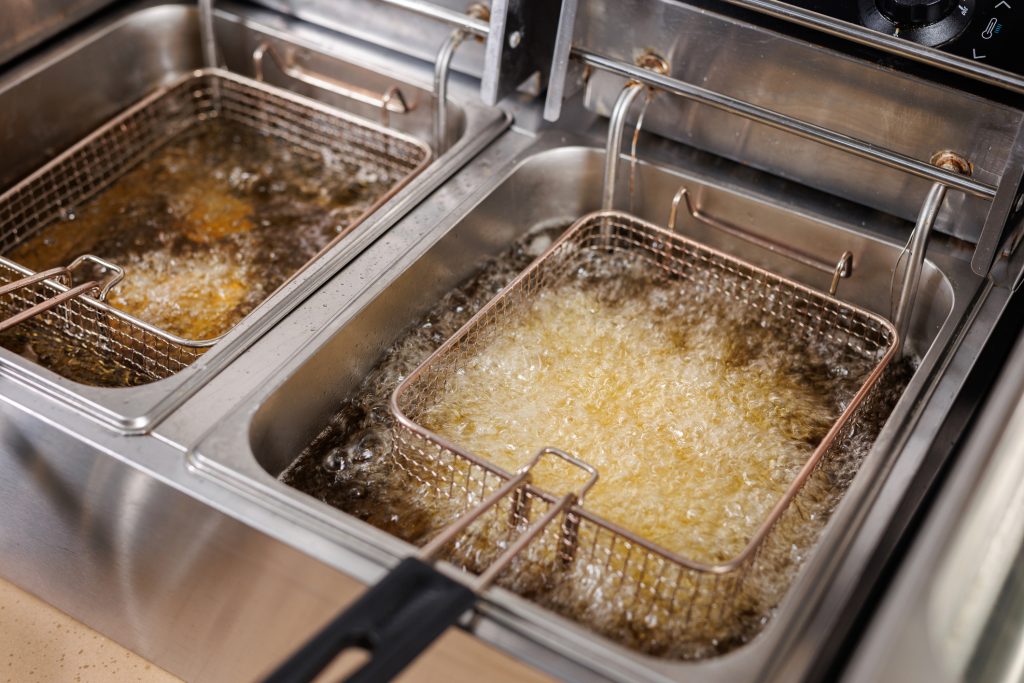
Used cooking oil must be collected and stored in approved containers designed for hot oil collection. Never use makeshift containers. Always allow oil to cool before transferring unless using equipment specifically designed for hot-oil disposal.
Do not overfill containers. Keep lids closed when the container is not in active use to reduce spills, odours, pests, and ignition hazards.
Where possible, store used-oil containers outdoors in a designated service area on a flat, stable, non-combustible surface. Keep them away from building openings, exit routes, air intakes, and ignition sources. If indoor storage is necessary, follow the applicable fire-code requirements for the space.
Inspect used-oil containers regularly for leaks, damaged lids, corrosion, blocked access, spills, or signs of overfilling. Clean spills immediately using appropriate non-combustible absorbent materials.
Use a licensed cooking-oil recycling provider and keep collection on a predictable schedule. Train staff in safe transfer procedures to prevent burns, splashes, spills, and slips. Safety Data Sheets for cooking oil should be available to support safe handling and emergency response.
Good used-oil storage and handling reduces fire risk, environmental exposure, odours, pests, and slip hazards.
Housekeeping
Good housekeeping is one of the easiest ways to reduce kitchen fire risk.

Keep cardboard, paper products, towels, linens, plastic containers, packaging, garbage, and other combustibles away from cooking equipment and the area under the hood.

Do not place garbage or recycling bins beside or under cooking equipment. Remove waste frequently so it does not overflow or add unnecessary fuel load in the kitchen.

Clean work surfaces, equipment exteriors, nearby walls, and floors regularly to prevent grease and debris build-up. Keep aisles and exits clear so staff can leave safely and emergency responders can access the area if needed.
Warming kitchens and serveries
Warming kitchens and serveries are intended for reheating, holding, and serving food rather than full cooking. They may include equipment such as microwaves, steam tables, hot-holding cabinets, toasters, rice cookers, and induction warmers.
These areas generally do not require a Type I commercial hood or fixed suppression system if they are used only for low-hazard reheating and serving activities that do not produce grease-laden vapours. They must not be allowed to become informal commercial cooking spaces as adding a fryer or griddle can change the code requirements for the room.
Do not introduce portable fryers, countertop griddles, hot plates, or similar appliances that can produce grease vapours unless the space has been reviewed and approved for that use. Staff and volunteers should know which appliances are permitted and which are not.
Facility management should inspect warming kitchens regularly for unauthorized appliances, overloaded outlets, damaged cords, poor housekeeping, or changes in how the space is being used.
| Permitted |
|---|
| Microwaves, steam tables, hot-holding cabinets, toasters, rice cookers, and induction warmers |
| Not Permitted |
|---|
| Portable fryers, countertop griddles, hot plates, grease vapour producing equipment |
What to do if a fire starts
If a fire starts, act quickly, and only if it is safe to do so.
End-user checklist
Use this checklist to support safe day-to-day kitchen operations.
Daily
Monthly
Service / records
In Summary
Commercial cooking risks can be safely managed when kitchens are used as intended, cleaned regularly, protected by properly maintained fire protection systems, and operated by trained staff. If there is any uncertainty about required equipment, cleaning frequency, system status, or code compliance, consult the authority having jurisdiction, a qualified fire protection contractor, and your insurer before continuing or changing operations.
Related Reading

Specialist School:
Event Planning Risk Management

Risk Guidance:
Food Preparation in Retirement Residences
Share this bulletin: