First Aid Preparedness and Emergency Response:
A Practical Guide for Canadian Organizations
This guide is intended for organizations across Canada. First aid and workplace health and safety requirements vary by province, territory, and sector. Throughout the guide, Ontario references are included as one example of how these requirements may be structured. Organizations should confirm the rules that apply to their location, sector, and workplace circumstances.


Medical emergencies can happen in any organization or public-facing environment, often without warning. Whether the situation involves a fall, sudden illness, cardiac event, or another injury, the first few minutes matter.
This guide explains what organizations should have in place to respond effectively, support staff and visitors, and meet applicable first aid and health and safety responsibilities.
Effective preparedness is not only about having supplies on site. It also means having trained people, clear procedures, accessible equipment, and a consistent response process when something goes wrong.
What Your Organization Needs to Know
Across Canada, organizations are generally expected to maintain a safe environment and have appropriate first aid measures in place. Organizations, employers, supervisors, managers, and workers often have defined responsibilities under occupational health and safety laws, while first aid equipment, training, posting, inspection, and recordkeeping requirements are typically addressed through province-, territory-, or sector-specific rules. In Ontario, for example, these requirements are set out through the Occupational Health and Safety Act (OHSA) and WSIB Regulation 1101.
Organizations should ensure that they:
- Provide a safe workplace and take reasonable precautions to prevent injury or illness
- Ensure workers receive appropriate information, instruction, and supervision
- Provide and maintain the required first aid supplies, equipment, postings, records, and trained responder coverage based on the applicable rules for the workplace
- Develop and enforce health and safety policies and procedures
- Meet any applicable requirements related to worker participation, such as a health and safety representative or committee where required
Supervisors must:
- Inform workers of hazards and respond to worker concerns
- Ensure safe work practices are followed
- Support compliance with workplace policies and procedures
Staff must:
- Follow safety procedures and use required protective equipment
- Report hazards, injuries, or unsafe conditions
- Work in a way that does not put themselves or others at risk

What Is Required and What Is Recommended
Must do (legal requirement):
- Maintain an accessible first aid station and properly stocked first aid kit that meets the applicable legal standard
- Ensure a trained worker is in charge of the first aid station and that first aid is available when work is in progress
- Keep required postings and records, and inspect first aid kits at least quarterly
Should do (best practice):
- Provide regular first aid and CPR training
- Conduct routine checks of emergency equipment
- Ensure staff understand emergency procedures
Training and Response Readiness
Training is one of the most important parts of emergency preparedness. Supplies are only useful if people know how to respond calmly, correctly, and without delay.
Organizations should ensure that the required number of designated workers are trained in first aid based on the rules that apply to their workplace. Training requirements vary across Canada by jurisdiction, sector, and workplace size. In Ontario, for example, required training levels are set out in WSIB Regulation 1101. Training should be obtained through a recognized provider such as the Canadian Red Cross, St. John Ambulance, or another accepted provider. Many first aid certificates are valid for three years, although some related certifications or refresher expectations may vary by course and jurisdiction.
Supplies are only useful if people know how to respond calmly, correctly, and without delay.
Staff should know:
Who the trained first aid responders are
Where first aid kits are located
How to call for emergency assistance
What to do while waiting for medical help to arrive
What to Include in a First Aid Kit
A first aid kit should be suitable for your organization and kept stocked, organized, and easy to access. Across Canada, minimum requirements depend on the applicable jurisdiction, the nature of the workplace, and sometimes the number of workers on site. In Ontario, for example, the required contents are set out by law and depend on workplace size and setting. If you use a best-practice checklist in addition to the legal minimum, contents may vary based on your operations, building use, or the number of people on site.
A well-maintained kit may include items such as:

Adhesive bandages in various sizes

Sterile gauze pads and dressings

Medical tape

Roller bandages

Antiseptic wipes
(if included as part of your organization’s approved kit standard)

Disposable gloves

Scissors

Tweezers

A resuscitation barrier or face shield

Burn dressings or burn gel
(if appropriate to your workplace risks and permitted by your approved kit standard)

Cold packs
(if appropriate to your workplace risks and permitted by your approved kit standard)

Triangular bandages

Eye pads

A first aid instruction sheet

An incident record form
Ultimately, you should ensure that kit contents meet or exceed the regulatory minimums that apply to your workplace.
The condition of the kit is just as important as the contents. Expired, damaged, or missing items reduce its usefulness when it is needed most.
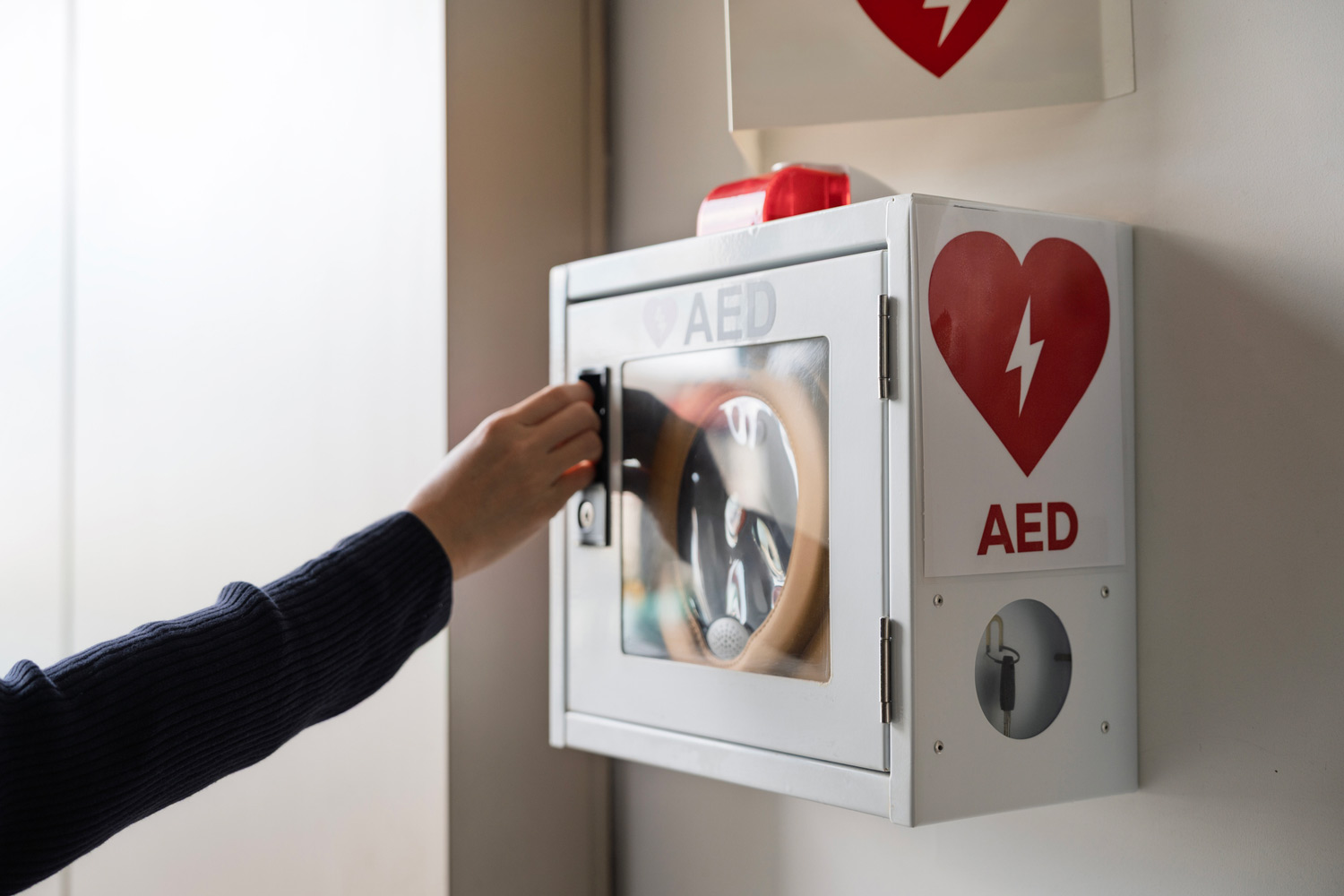
When to Consider an AED
For larger organizations or those that regularly host public gatherings, it may be worth considering adding an Automated External Defibrillator (AED) as part of emergency preparedness. In many Canadian workplaces, an AED is a best-practice measure rather than a general legal requirement, although some sectors, provinces, territories, or facility types may have more specific expectations. Ontario is one example where AEDs are often encouraged but not universally required across all workplaces.
What is an AED?
An AED is a portable device that analyzes a person’s heart rhythm and, when appropriate, delivers a shock to help treat certain life-threatening rhythms seen in sudden cardiac arrest. It is not used to treat a heart attack itself. Used together with CPR and rapid activation of emergency medical services, early AED use can significantly improve the chances of survival in a cardiac emergency.
Having an AED onsite can make a critical difference in a cardiac emergency, but only if it is ready to use and people know where it is and how to use it.
If your organization has an AED:
- Make sure staff know where it is located
- Ensure appropriate staff are trained in its use
- Check the unit regularly to confirm it is operational
- Monitor battery life and pad expiry dates
- Ensure it is clearly marked and easy to access at all times
If an AED is installed, staff who are most likely to respond should be familiar with its location and use. Formal AED training is strongly recommended and is often included with workplace first aid and CPR training.
Having an AED onsite can make a critical difference in a cardiac emergency—but only if it is ready to use and people know where it is and how to use it
Preparedness Depends on Maintenance
Most organizations focus on having emergency equipment on site—but fewer think about whether it will work when needed. In many cases, the issue is not the absence of equipment, but a lack of routine checks and maintenance.
For example, many organizations install an AED or have a first aid kit stored and assume they are prepared. However, preparation does not end once the device is on the wall or the kit is stored in a cupboard.


How to Check Emergency Equipment Readiness
Emergency supplies and equipment should be checked on a regular basis.
A quick monthly inspection can help confirm that:
- First aid kits are fully stocked
- Items are not expired
- Gloves and dressings are sealed and usable
- AEDs, if present, show ready status
- Batteries and pads are in date
- Signage is visible
- Equipment is accessible and not blocked
Readiness checks are simple, but they are often overlooked until after an incident occurs.
Common Gaps to Watch For
Even organizations with good intentions can miss simple issues that affect emergency response. Common oversights include:
- First aid kits that are incomplete, outdated, or difficult to access
- Staff being unaware of where emergency supplies are kept
- Not having a designated person assigned for checking kits or equipment on a regular basis
- Expired AED batteries or pads
- Emergency equipment hidden in locked rooms or behind clutter
- No written process for documenting and reporting an incident
- Failure to preserve relevant CCTV footage after an event
- Training that has not been refreshed in several years
These are often preventable issues that can usually be corrected through routine review and clear accountability.
What to Do If an Incident Occurs
A clear response process helps reduce confusion, support the injured person, and ensure proper follow-up.
1. Ensure the scene is safe
Before approaching, check for hazards such as traffic, electricity, fire, chemicals, violence, or unstable structures. Do not put yourself or others at risk. If the scene is unsafe or you are unsure, call emergency services and wait for trained responders.
2. Assess the individual
Check the person’s condition and respond based on the severity of the situation. Stay with the individual, where appropriate, until help arrives.
3. Get medical help
Provide first aid if needed and call emergency services when the situation requires urgent medical attention. If the injury or illness requires treatment, arrange medical care without delay.
4. Document the incident
Inform the employer or supervisor as soon as possible and record the key facts, including:
- What happened
- Where and when it occurred
- Who was involved
- Witnesses present
- First aid or medical care provided
5. Preserve relevant information
If the incident took place in an area covered by surveillance, review and retain any relevant CCTV footage. This may be important for understanding what happened and supporting internal or external reporting requirements. Any preserved footage should be handled in accordance with privacy and confidentiality requirements.
6. Report as required
Workplace injuries or illnesses must be reported in accordance with the legal requirements that apply to your workplace. Reporting obligations vary across Canada depending on the jurisdiction, the type of incident, and the sector. In Ontario, for example, an employer generally must report certain work-related injuries or illnesses to the WSIB within three business days after learning of the reporting obligation, if the worker needs health care, loses time from work, earns less than regular pay, or requires certain modified work. Separate notification rules may also apply for critical injuries, fatalities, or other prescribed events.
A worker who is injured or becomes ill at work should generally:
- Get medical help
- Tell the employer about the injury or illness
- Ensure the incident is documented
- Report the injury or illness through the appropriate process
- Work with the employer on recovery and return to work, where applicable
Customer Preparedness Checklist
Use the checklist below to review your current readiness:
What This Means in Practice
Being prepared for a medical emergency means more than having a first aid kit on a shelf. It means having clear procedures, trained staff, and the right supplies and equipment available and ready to use.
Simple steps such as checking first aid kits, refreshing training, assigning responsibilities, and confirming how incidents will be documented and reported can make a meaningful difference when an emergency occurs.
A Final Note
This guide provides general information and is not a substitute for emergency services, professional medical advice, or legal advice. Because requirements vary across Canada, organizations should confirm the obligations that apply to their workplace, sector, and jurisdiction.
Share this bulletin: