
Developing a strategic risk-based approach to doing business
Developing a recovery plan to help you navigate the 'new normal' is good governance and using a risk-based approach will mean you are better prepared for whatever the future may hold.
The COVID-19 pandemic fundamentally reshaped the way organizations operate, resulting in long-term changes across all industries. From evolving workforce expectations to supply chain disruptions and shifting customer behaviours, many of these changes continue to influence business operations today.
A well-considered risk management approach helps organizations navigate evolving environments by identifying emerging risks, strengthening resilience, and preparing for future uncertainty.
Many strategic and operational risks that existed before the pandemic remain relevant so regularly reviewing and reassessing these risks is critical as they change over time. An ongoing commitment to risk management enables organizations to adapt confidently and remain resilient in an increasingly complex business landscape.
Planning Framework
We have created a Planning Framework together with a suite of tools below to help you to build your approach. You can use the tools to revisit and assess your organization's strategy and objectives and help assess the impact, risks and opportunities going forward.
Take a risk-based approach to your planning.
The following three connected and important components will help you to establish a short to medium-term strategic recovery plan that considers governance, resources and the processes required to successfully execute it.

3 Areas of Focus
-
Strategy
-
Operations
-
Workforce
Revisit your strategic priorities and operations and consider workforce implications. For each area, ask yourself:
- What has happened?: What has the organization learned from the pandemic?
- What is the impact?: What impacts has the pandemic had on the organization-operations, workforce and community?
- What are the opportunities and risks?: What opportunities and risks have been identified?
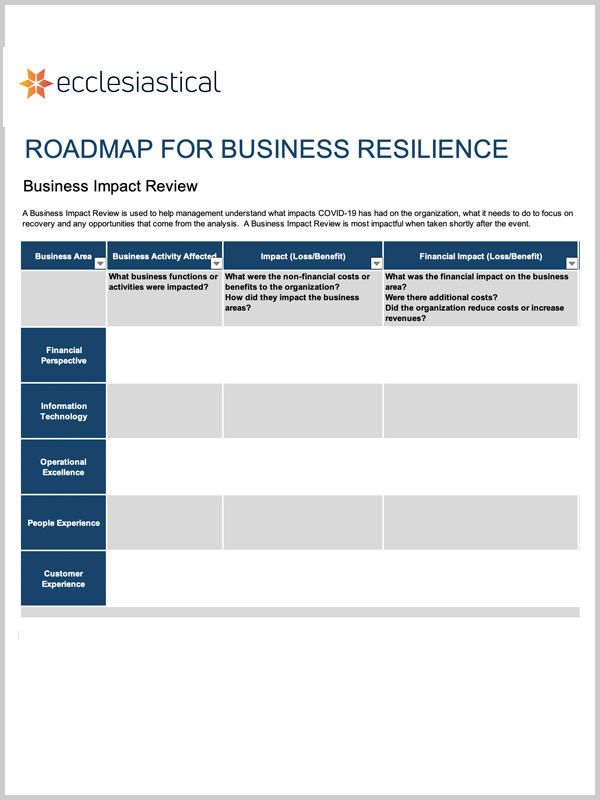
The Business Impact Review template will help you assess the impact the pandemic has had on your organization for recovery planning considerations.
4 Key Enablers
-
Governance & Risk
-
Finance
-
Community & Stakeholders
-
Technology Capability
The review of key enablers and influences is crucial to managing the objectives set in your recovery plan. Great plans are frequently let down because these four areas have not had sufficient oversight or assessment.
Our Key Enabler checklists below provide you with questions designed to help you start planning your recovery and the best use of resources.
Related Resources
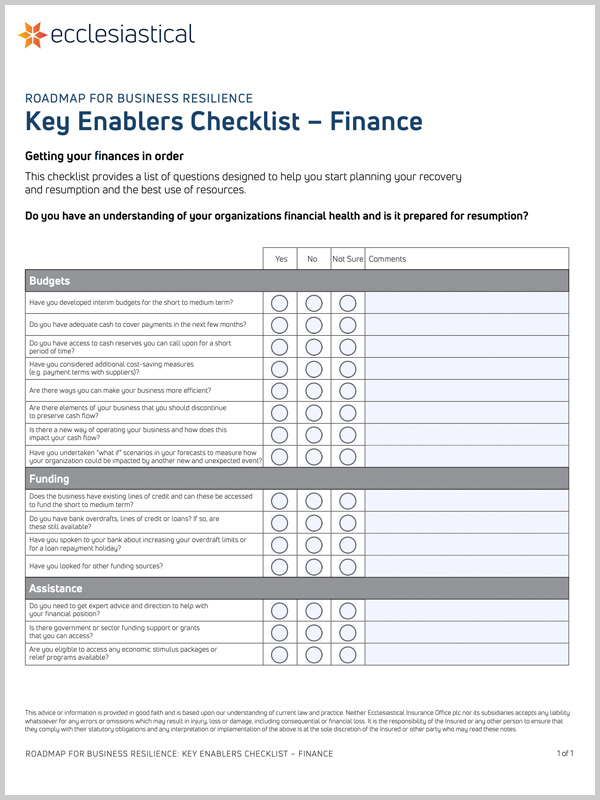
Key Enabler Checklist:
Finance
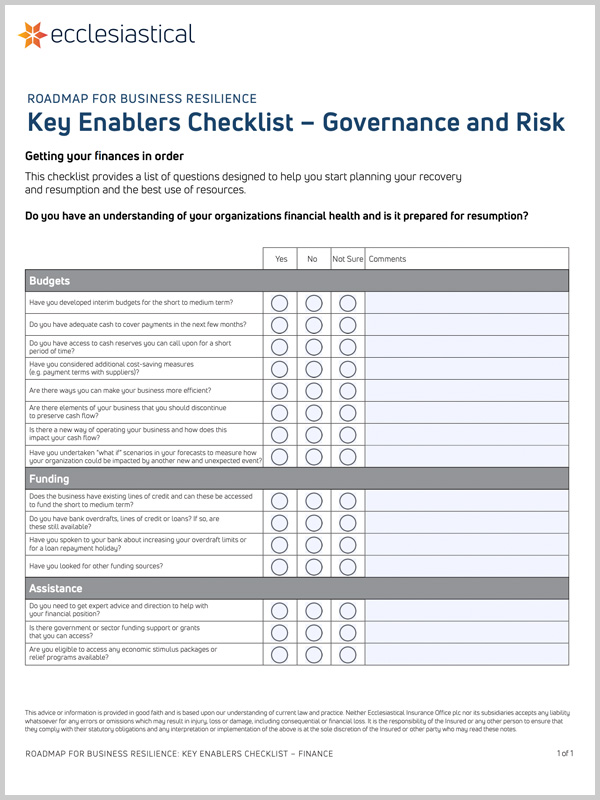
Key Enabler Checklist:
Governance
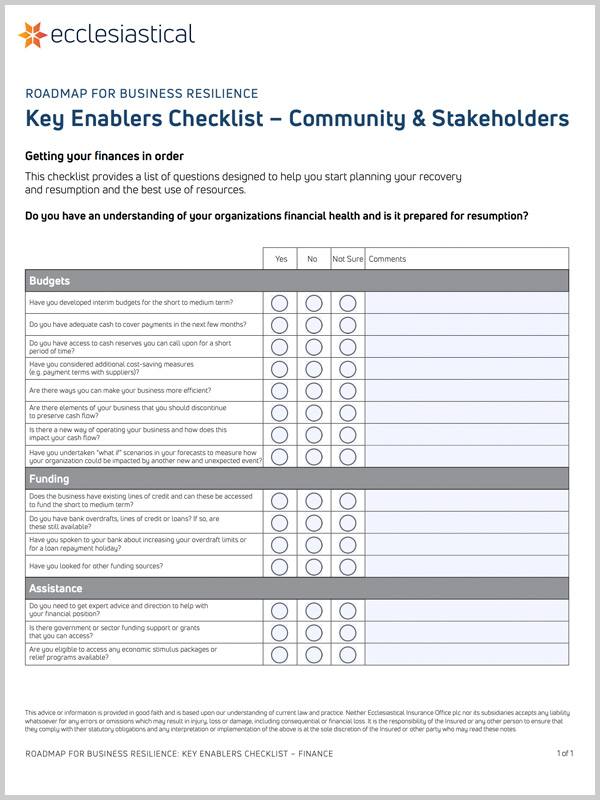
Key Enabler Checklist:
Stakeholders
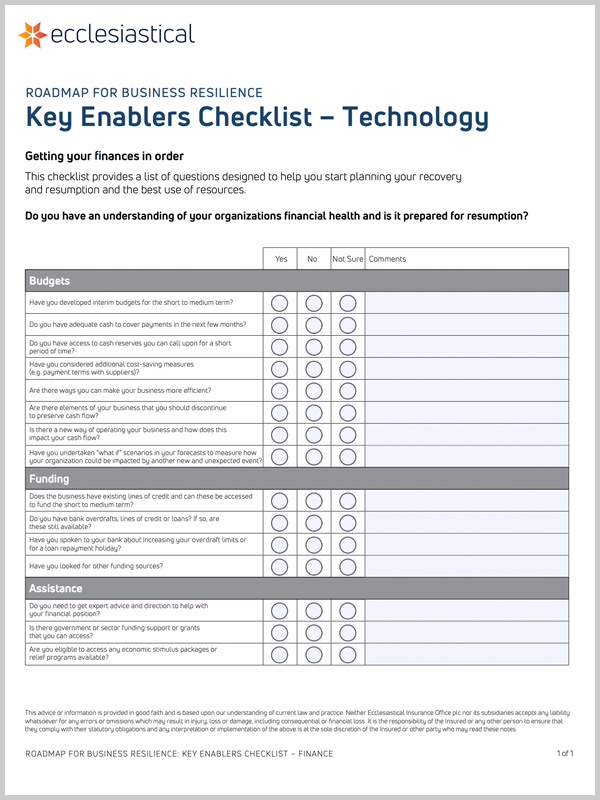
Key Enabler Checklist:
Technology
5 Strategic Steps
When building your recovery plan consider the following five strategic steps:
-
Position
What is your position within the market and community?
- Who are your competitors?
- Have you lost ground?
- Is solvency a risk?
- Has your organization learned from the pandemic?
- What developments during the pandemic can you use as a lever?
- Has compliance been monitored and achieved?
- Is a new value proposition warranted?
-
Perspective
Has the business and operating landscape changed for your organization?
- How prepared was the organization for a significant disruption and how well has it coped?
- What aspects of your culture and identity will change as a result of the pandemic?
- Is there a greater sense of unity and cooperation within the organization or less so?
- Will you see the organization differently when this is all over?
- Are you more resilient?
-
Plan
What will you do and what must you do?
- A lack of a plan exacerbates disorientation and uncertainty, giving rise to risk and limiting opportunities.
- Having reviewed the key areas of focus and assessed the key enablers, what actions can you take; what risks and opportunities will you pursue and how?
-
Projects
What elements of the plan are high priority and require careful coordination?
- What are the priorities for the organization's resources?
- Be clear on the projects that will contribute to future-proofing the organization.
- Will the future bring the organization closer together or drive it apart?
- Too many initiatives can overwhelm an already stressful environment.
- Use project methodologies to manage elements that are higher risk and require close monitoring
-
Preparedness
Action Plan (PDF)
- Do you know the risks associated with executing your recovery plan?
- How resilient are you for the next potential disruption?
By using the 5-P analysis and the Roadmap for business resilience tools you can identify your short to medium term priorities (Strategic Priorities) and what actions you need take (Action Plan) to start your planning (Strategic Plan and Risk Assessment) and trigger your recovery.
Related Resources
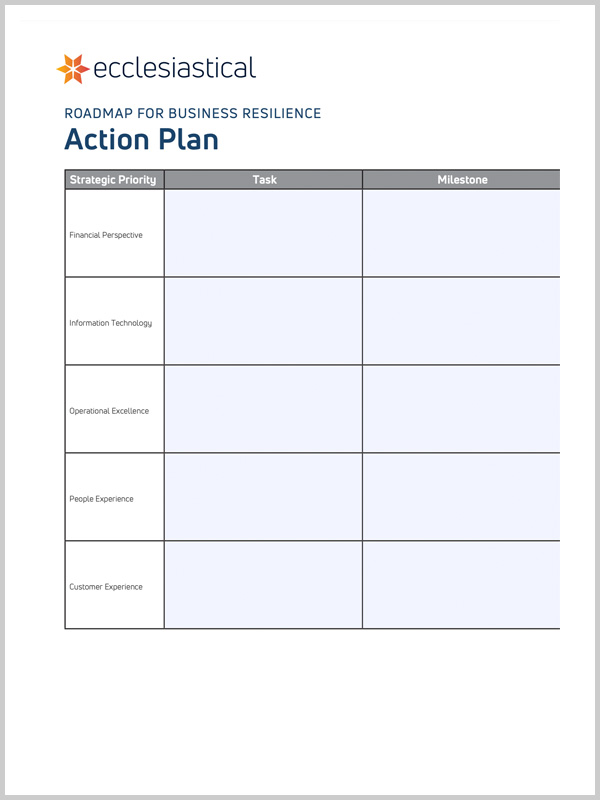
Action Plan
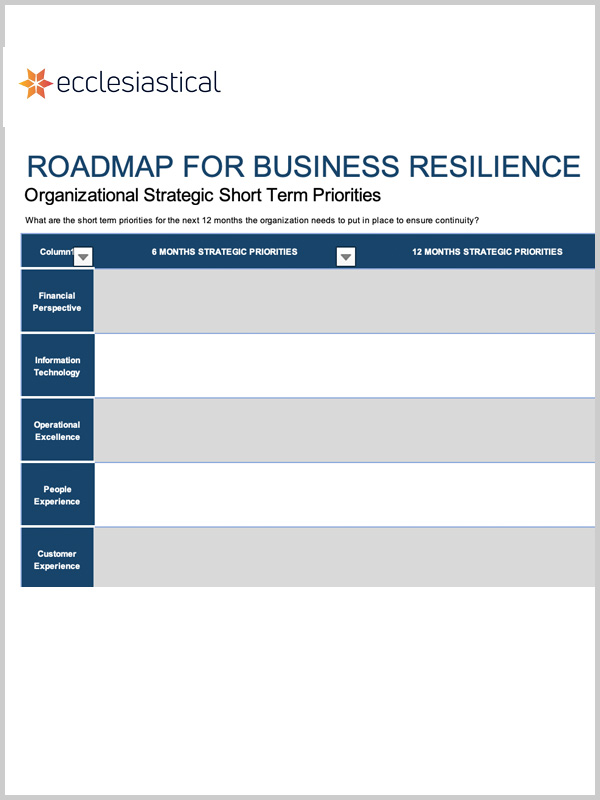
Strategic priorities template (XLS)
Strategic plan template (DOCX)
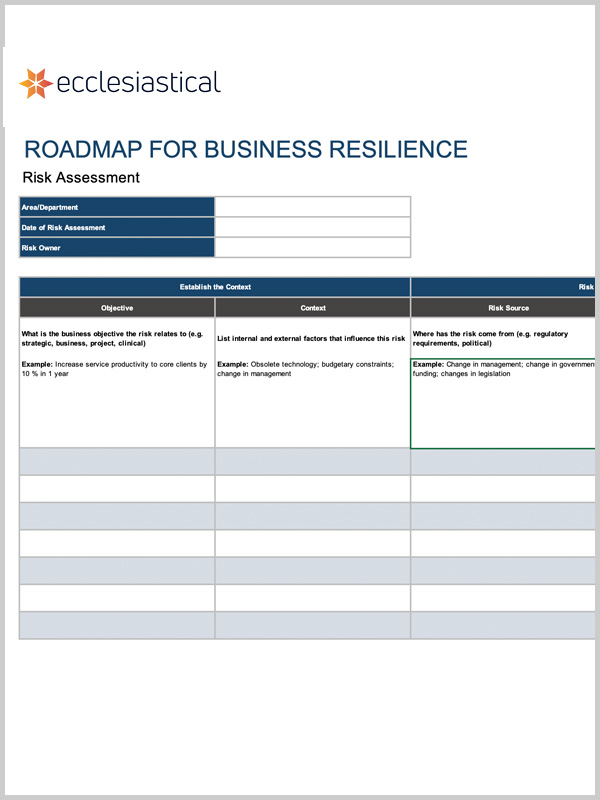
Risk assessment worksheet (XLS)
These tools intend to be a starting point that should be adapted to each organization's specific context. They may not apply to everyone and are not intended as complete advice.