
Toronto, ON — April 22, 2025: As flooding continues to be one of the most frequent and costly sources of property damage in Canada (Public Safety Canada¹), Ecclesiastical Insurance is urging organizations to take a more proactive and sustained approach to flood prevention and resilience planning.
From urban overland flooding to sewer backup and extreme weather events, the risk landscape is evolving, placing increased pressure on property owners, brokers, and insurers alike to prioritize preparedness well before an event occurs.
“Flood risk is no longer a seasonal concern. It is a year-round exposure that requires ongoing attention. The most effective way to reduce loss is through a combination of planning, prevention, and practical mitigation measures that can be implemented well in advance of an event,” says Colin Robertson, Chief Experience Officer, Ecclesiastical Insurance.
Flooding is a risk for any property owner, but customers in the heritage, education, arts and culture, faith, and not-for-profit sectors face particular exposure. Aging infrastructure, irreplaceable assets, and operational complexity mean that even minor flooding can result in significant disruption and prolonged restoration — outcomes that careful preparation can help prevent.
For brokers and clients, this highlights the value of understanding site-specific exposures and implementing tailored risk controls, including drainage management, building maintenance, emergency response planning, and protection of critical assets and collections.
To help organizations strengthen their flood readiness, Ecclesiastical has developed a suite of practical risk management resources covering prevention, mitigation, and response planning:
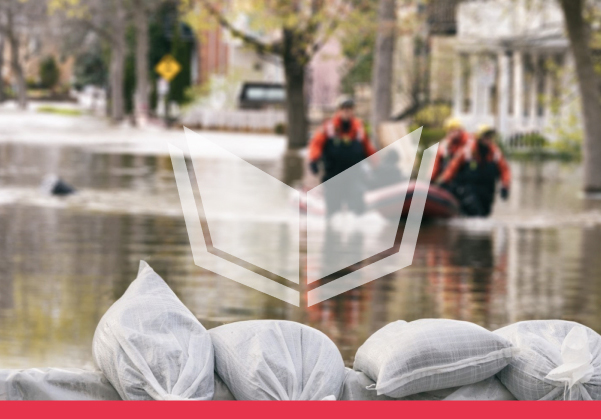
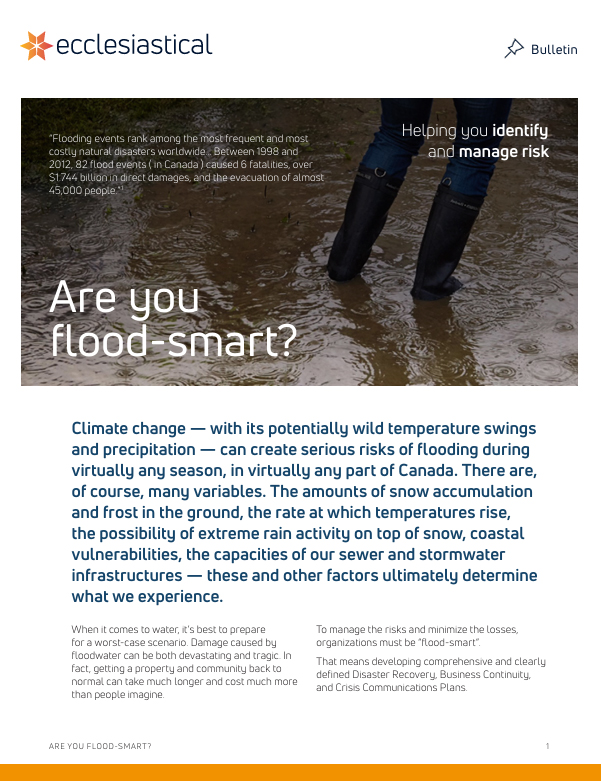
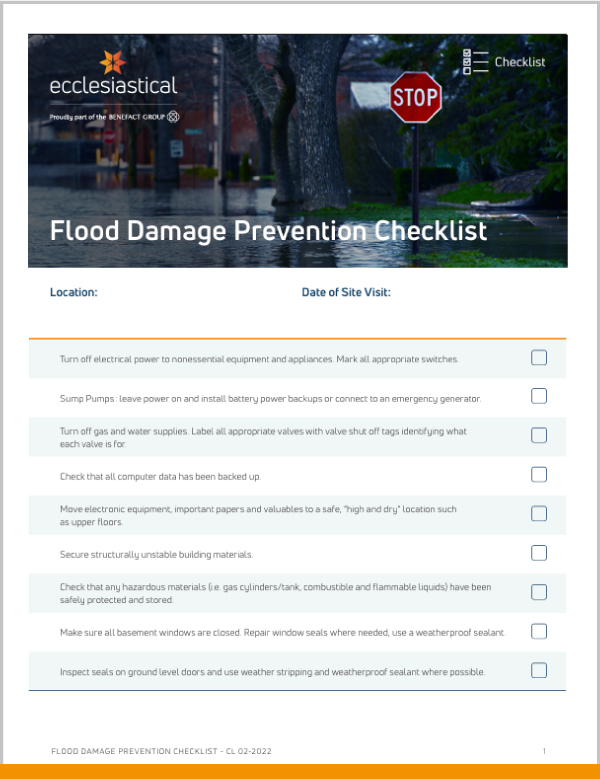
These resources provide actionable guidance to help organizations assess their exposure, protect their properties, and respond effectively if flooding occurs.
As climate patterns continue to shift and severe weather becomes more frequent, early planning and ongoing risk management will be critical in reducing losses and building long-term resilience across the sector.
¹Public Safety Canada, “Backgrounder: Floods,” publicsafety.gc.ca