
Toronto, ON – December 11, 2025: As faith communities across Canada enter one of the busiest seasons of the year, Ecclesiastical Insurance is urging places of worship to take extra precautions against increased fire and arson risks. With more ceremonies involving candles, combined with seasonal closures, fluctuating attendance, and heightened community activity, December is a time when the likelihood of both accidental and intentional fires rises significantly.
“Holiday celebrations bring people together in meaningful ways, but they also introduce additional hazards,” said Colin Robertson, Chief Risk & Customer Officer, Ecclesiastical Insurance. “Candlelit services, vigils, processions, other ceremonies involving flame, along with decorative lighting and higher foot traffic, can all increase fire risk, while arson remains an ongoing concern for isolated or unoccupied buildings during the winter months.”
To support faith organizations during this high-risk period, Ecclesiastical has prepared risk mitigation materials on fire safety and arson prevention.
Ecclesiastical Specialist School™

Arson: Protecting Places of Worship
Ecclesiastical Specialist School™ training module designed to help you implement an effective arson prevention plan to better protect your property and community.
Risk Bulletins
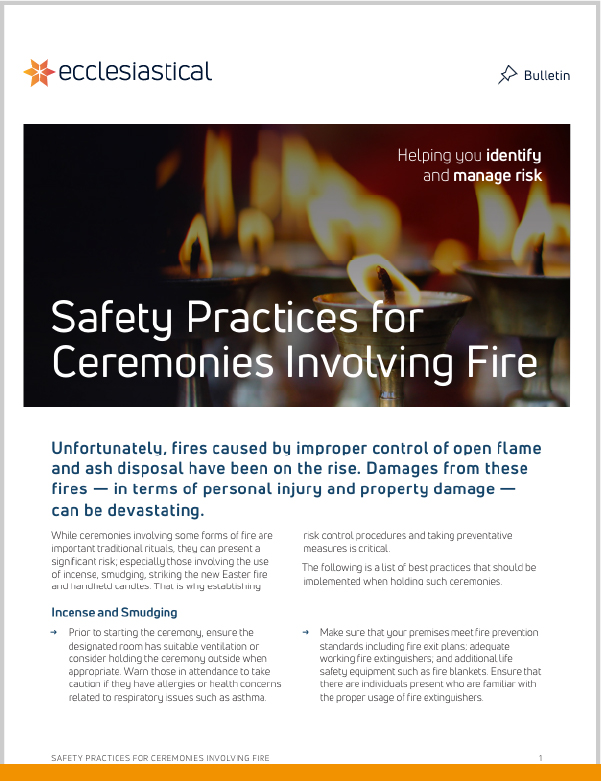
Safety Practices for Ceremonies Involving Fire
This bulletin outlines essential precautions for candlelit services, vigils, processions, and other ceremonies involving flame, ensuring sacred traditions can be celebrated safely.
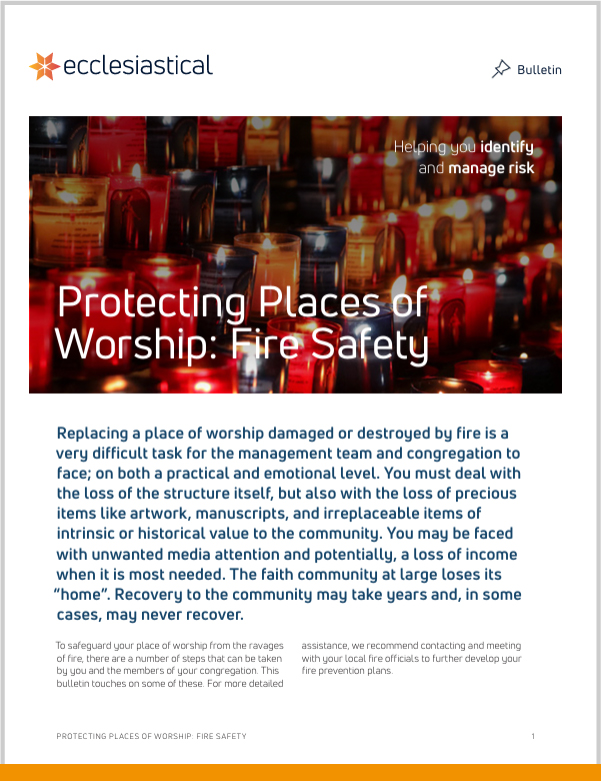
Protecting Places of Worship: Fire Safety
A practical overview of building-wide fire protection measures, including safe storage practices, inspection routines, emergency planning, and maintenance of heating and electrical systems.
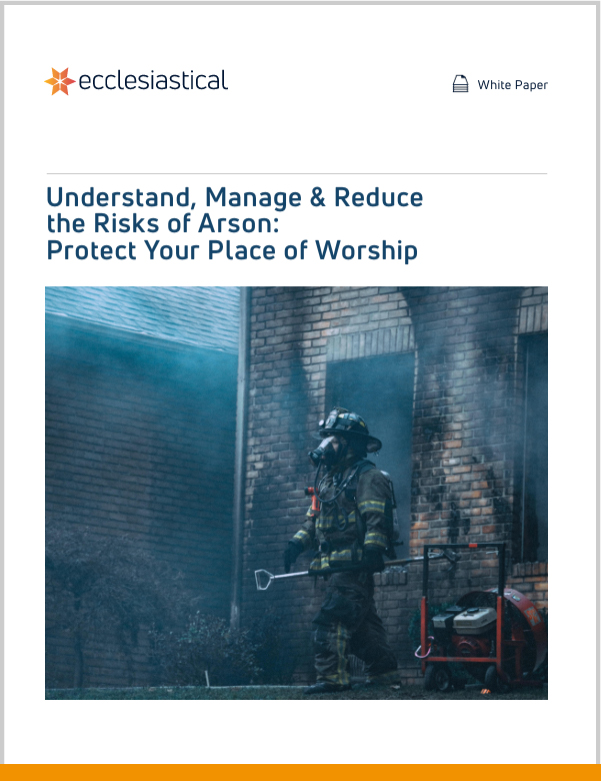
Understand, Manage & Reduce the Risks of Arson
Guidance to help organizations identify vulnerabilities, strengthen deterrence, and work with local authorities to protect their buildings during periods of low activity.
Helping Communities Stay Safe This Season
“Prevention is the most effective tool we have,” Colin Robertson adds. “A few proactive steps, such as improving exterior lighting, securing unused areas, training volunteers, and reviewing emergency plans, can dramatically reduce the risk of fire or arson.”
For additional fire-safety guidance and access to Ecclesiastical’s full library of risk resources, visit ecclesiastical.ca.